Empowering Inclusive Education: Insights from the IDEATE Project’s 4th Transnational Partners Meeting in Perugia

Date published: October 09, 2026
3 min read

At ASSIST, our mission has always been anchored in a deep commitment to community growth, human support, and, above all, education. Driven by the belief that excellence in learning is built by equipping schools with innovative tools, fostering inclusive environments, and empowering students and teachers alike, we are continually seeking ways to shape a smarter, more accessible future.

This core dedication is why we are proud to be part of the IDEATE (Inclusive Digital Education and Teacher Empowerment Academy) project. IDEATE tackles a critical challenge of modern classrooms: bridging the gap between traditional teaching methods and the fast-paced demands of a digital society. By blending inclusive educational practices, emotional intelligence, and state-of-the-art digital tools, the project helps European educators better support neurodivergent and diverse learners, shaping a more resilient and welcoming learning environment for everyone.

Advancing this shared vision, the IDEATE consortium recently convened for its 4th Transnational Partners Meeting from October 5 to 6, 2026, hosted by project partner the University of Perugia.  
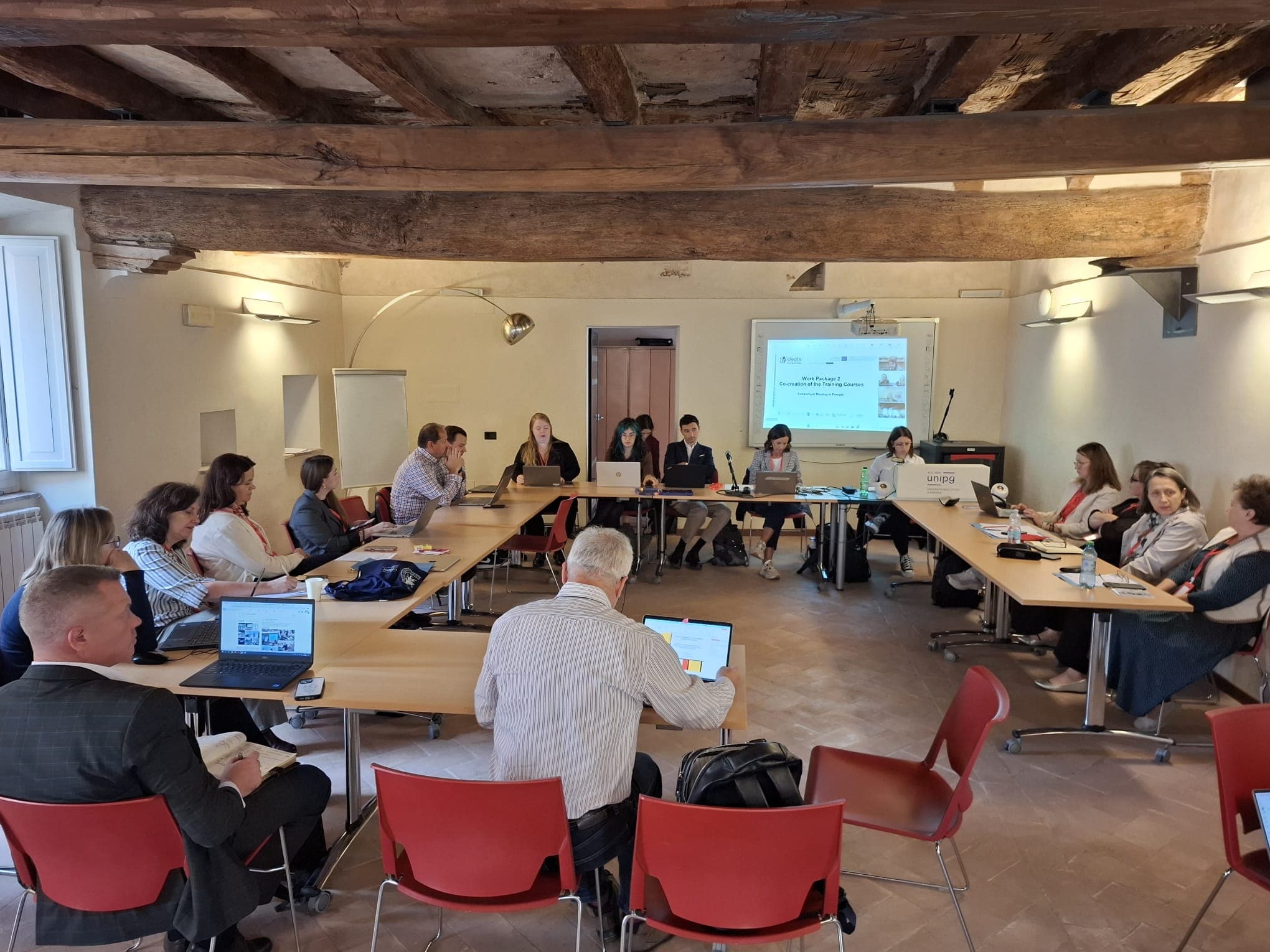
IDEATE Meeting ASSIST Software

Reviewing Progress and Advancing Key Milestones

The two-day meeting provided a valuable opportunity for partners to review progress to date and align on next steps across the project's work packages. With the Project Officer representing the European Commission (EC) joining the sessions, the consortium benefited from insightful feedback and encouragement as the initiative continues to scale its impact across Europe.

The main highlights from our work sessions included:

  • Project Management & Strategic Coordination: The consortium evaluated overall project workflows, timeline milestones, and quality assurance measures to ensure seamless execution across all participating institutions.
     
  • Curriculum & Specialized Training Courses: Partners reviewed the latest milestones in co-designing specialized training programs and curricula tailored to real classroom needs. These courses focus heavily on core pillars of modern education: fostering social-emotional learning, integrating teacher wellbeing and mental health into professional development, building a robust Training of Trainers model, and equipping educators with actionable strategies to support neurodivergent and diverse students at every stage of their learning journey.
     
  • Platform MVP Presentation: As a core technical partner, ASSIST presented the Minimum Viable Product (MVP) of the project’s digital platform for internal review. Designed as an interactive collaborative hub, the platform integrates advanced AI capabilities, adaptive learning mechanisms, and gamification features. These tools enable the project team to test personalized content creation, evaluate progress-tracking features, and refine the integration of smart technology with human-first pedagogy. 
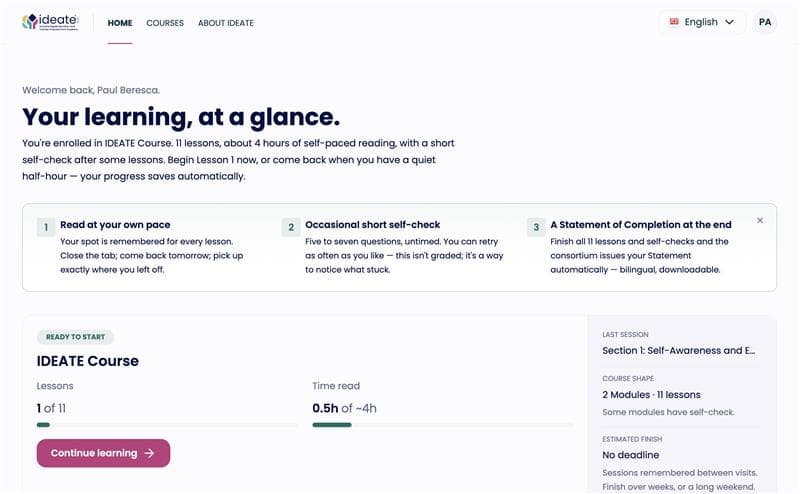
IDEATE ASSIST Software
  • Dissemination & International Recognition: Due to the partners’ commitment, the project's visibility is rapidly expanding on the global stage. IDEATE’s framework and research have been showcased at prestigious international symposia and conferences – including the 10th European Network for Social and Emotional Competences (ENSEC) Conference in Porto, the 10th International Congress of The International Society for Emotional Intelligence (TISEI) conference at Yale University, and the International Association of School Psychology (ISPA) Conference in Lyon. Furthermore, the project reached wider audiences through collaborative international mobilities in Mexico (at the Autonomous University of Quintana Roo / UAQROO) and local community engagement during Researchers' Night at Ștefan cel Mare University of Suceava. These milestones continue to generate strong academic interest and foster cross-border collaboration.

After two highly productive days, partners left Perugia united and energized for the road ahead. With clear milestones set for upcoming pilot programs, teacher cohorts, and digital tools, the IDEATE team remains deeply committed to empowering educators to unlock the full potential of every single learner. 
 

Share on:

I have read and understood the ASSIST Software website's Terms of Use and Privacy Policy.

Want to stay on top of everything?

Get updates on industry developments and the software solutions we can now create for a smooth digital transformation.

Frequently Asked Questions

1. Can you integrate AI into an existing software product?

Absolutely. Our team can assess your current system and recommend how artificial intelligence features, such as automation, recommendation engines, or predictive analytics, can be integrated effectively. Whether it's enhancing user experience or streamlining operations, we ensure AI is added where it delivers real value without disrupting your core functionality.

2. What types of AI projects has ASSIST Software delivered?

We’ve developed AI solutions across industries, from natural language processing in customer support platforms to computer vision in manufacturing and agriculture. Our expertise spans recommendation systems, intelligent automation, predictive analytics, and custom machine learning models tailored to specific business needs.

3. What is ASSIST Software's development process?  

The Software Development Life Cycle (SDLC) we employ defines the stages for a software project. Our SDLC phases include planning, requirement gathering, product design, development, testing, deployment, and maintenance.

4. What software development methodology does ASSIST Software use?  

ASSIST Software primarily leverages Agile principles for flexibility and adaptability. This means we break down projects into smaller, manageable sprints, allowing continuous feedback and iteration throughout the development cycle. We also incorporate elements from other methodologies to increase efficiency as needed. For example, we use Scrum for project roles and collaboration, and Kanban boards to see workflow and manage tasks. As per the Waterfall approach, we emphasize precise planning and documentation during the initial stages.

5. I'm considering a custom application. Should I focus on a desktop, mobile or web app?  

We can offer software consultancy services to determine the type of software you need based on your specific requirements. Please explore what type of app development would suit your custom build product.   

  • A web application runs on a web browser and is accessible from any device with an internet connection. (e.g., online store, social media platform)   
  • Mobile app developers design applications mainly for smartphones and tablets, such as games and productivity tools. However, they can be extended to other devices, such as smartwatches.    
  • Desktop applications are installed directly on a computer (e.g., photo editing software, word processors).   
  • Enterprise software manages complex business functions within an organization (e.g., Customer Relationship Management (CRM), Enterprise Resource Planning (ERP)).

6. My software product is complex. Are you familiar with the Scaled Agile methodology?

We have been in the software engineering industry for 30 years. During this time, we have worked on bespoke software that needed creative thinking, innovation, and customized solutions. 

Scaled Agile refers to frameworks and practices that help large organizations adopt Agile methodologies. Traditional Agile is designed for small, self-organizing teams. Scaled Agile addresses the challenges of implementing Agile across multiple teams working on complex projects.  

SAFe provides a structured approach for aligning teams, coordinating work, and delivering value at scale. It focuses on collaboration, communication, and continuous delivery for optimal custom software development services. 

7. How do I choose the best collaboration model with ASSIST Software?  

We offer flexible models. Think about your project and see which model would be right for you.   

  • Dedicated Team: Ideal for complex, long-term projects requiring high continuity and collaboration.   
  • Team Augmentation: Perfect for short-term projects or existing teams needing additional expertise.   
  • Project-Based Model: Best for well-defined projects with clear deliverables and a fixed budget.   

Contact us to discuss the advantages and disadvantages of each model. 

ASSIST Software Team Members